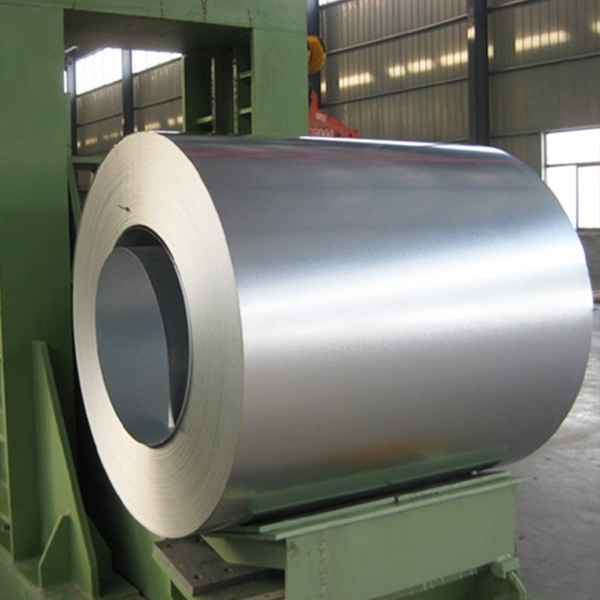
Procuring steel directly impacts project margins, structural integrity, and timeline adherence. Choosing the wrong supplier leads to project delays, coating failures, and blown budgets. Modern construction demands reliable materials to withstand harsh environmental conditions. Inconsistent product quality can compromise entire structures quickly. Procurement and project managers need a pragmatic, evidence-based framework. You must evaluate, shortlist, and negotiate correctly to protect your investments.
This guide provides those exact procurement tools. You will learn how to properly vet a Galvalume Steel Coil supplier from the ground up. We cover technical vetting and supply chain risk mitigation thoroughly. You will also discover how to evaluate hidden procurement expenses beyond the initial sticker price. By applying these strict standards, you protect your end client. This ultimately builds your reputation for delivering durable, compliant structures.
Key Takeaways
Supplier reliability hinges on verifiable Quality Control (QC) documentation, specifically Mill Test Certificates (MTC) and adherence to ASTM/EN standards.
Global sourcing requires factoring in hidden costs: sea-freight volatility, customs, and specialized packaging to prevent moisture damage during transit.
Evaluating an **AZ coating steel coil** requires aligning coating weights (e.g., AZ50, AZ55/AZ150) directly with local environmental demands and warranty expectations.
Selecting a long-term partner means assessing their production capacity, financial stability, and ability to handle specialized construction specifications.
Defining Success: Why Construction Buyers Specify Galvalume
Galvalume dominates the modern construction landscape for excellent reasons. It features a highly specific alloy composition. The coating consists of 55% Aluminum, 43.4% Zinc, and 1.6% Silicon. This unique blend dramatically outperforms standard galvanized steel in long-term corrosion resistance. Aluminum provides an impenetrable barrier against environmental elements. Zinc offers sacrificial protection, preventing rust along cut edges and scratches. Builders rely heavily on this material for premium roofing and wall cladding systems.
Consider the long-term return on investment. Extending the lifespan of a construction steel coil translates directly to lower maintenance costs. End clients receive significantly better warranty offerings. They trust your construction quality when roofs remain pristine for decades. Galvalume consistently delivers this durability.
Apply a strict decision lens during procurement. Buyers must ensure the project dictates the material specifications. You must specify the exact yield strength, coating weight, and surface treatment required. Never let a supplier push their available inventory onto your project. Compromising on specifications to secure faster shipping always backfires eventually.
Essential Quality Metrics for AZ Coating Steel Coil
When sourcing an AZ coating steel coil, precision is completely non-negotiable. You need verifiable data to guarantee structural safety.
Verifiable Technical Specifications
Specify your exact coating mass explicitly. An AZ150 designation indicates 150 grams of aluminum-zinc coating per square meter. Demand strict tolerance guarantees on this weight. Thinner coatings degrade faster under UV exposure and rain.
Never confuse Base Metal Thickness (BMT) and Total Coated Thickness (TCT). Some suppliers manipulate thickness measurements to cut costs. They might apply a slightly thicker, cheaper coating over a dangerously thin steel base. You must specify BMT clearly. This ensures the structural steel core meets your load-bearing requirements.
Match mechanical properties directly to your application. Roofing sheets usually require high tensile strength. Conversely, forming applications need softer, more ductile steel.
Table: Structural Grade Comparison for Construction Needs
Anti-fingerprint (AFP) coatings protect the material during installation. Installers leave fewer smudges, reducing post-installation cleaning. You can specify clear or colored AFP. Colored AFP (often a light blue or green tint) helps factory workers easily identify the coated top side.
Environmental compliance dictates your chemical finishes. Chromated finishes offer outstanding rust prevention during transit. However, non-chromated finishes meet stringent RoHS compliance rules. They remain safer for eco-friendly green building projects.
Always mandate a certified Mill Test Certificate (MTC) prior to shipment to mitigate risk. This document verifies the exact chemical composition. It also proves the material passed all required mechanical testing at the mill.
How to Vet a Galvalume Steel Coil Manufacturer
Finding a reliable galvalume steel coil manufacturer requires thorough operational vetting. You must look past their marketing brochures.
Assess their facility and actual production capacity first. Do they have in-house cold rolling and continuous coating lines? Many companies act merely as trading intermediaries. Traders often outsource production to the lowest bidder. Direct manufacturers offer significantly better consistency and quality control.
Review their Quality Assurance (QA) protocols meticulously. Reliable mills perform standardized testing daily. Salt spray tests simulate years of coastal exposure. Bending tests ensure the alloy coating does not flake off under pressure. Impact tests verify overall durability. Look for valid ISO 9001 certifications. Ensure they comply strictly with international standards like ASTM A792, EN 10346, or JIS G3321.
Traceability protects your investment long after delivery. The factory must track individual coils meticulously. They should use unique heat numbers and barcode labels. You should easily trace any coil from the production line straight to your job site.
Evaluate their post-sale support before signing a contract. Manufacturing anomalies occasionally happen. How does the supplier handle defect resolution? You need clear claim processing policies documented upfront. Technical support should remain easily accessible throughout your project lifecycle.
Navigating Global Sourcing: Evaluating a Galvalume Supplier China
Global procurement offers massive financial advantages for large-scale construction. You will likely evaluate a galvalume supplier China during your sourcing journey.
Balance the cost-quality calculus carefully. Chinese manufacturers provide highly competitive pricing due to massive economies of scale. However, you must verify supply chain reliability. Consistent quality matters far more than securing the absolute lowest initial price.
Choose your logistics and Incoterms wisely. FOB (Free on Board) terms give you total control over ocean freight selection. CIF or CFR terms pass the shipping responsibilities to the seller. Pick the option offering you the best visibility and insurance control.
Packaging standards remain absolutely crucial. Long ocean transits expose steel to aggressive salt air and condensation. White rust can destroy a shipment in weeks. You must explicitly specify "seaworthy export packaging" in your contract.
Waterproof Paper: The first layer wrapped tightly around the bare metal to block immediate moisture.
Plastic Film: A secondary barrier sealing out humid ocean air completely.
Steel Guard Rings: Installed on the inner and outer edges to prevent physical transit damage.
Anti-Rust Moisture Absorbers: Desiccant packets placed strategically inside the eye of the coil.
Corrugated Steel Outer Wrap: A hard outer shell strapped tightly with steel bands.
Understand local compliance and tariffs. Check for active anti-dumping duties in your destination country before ordering. Calculate import taxes accurately. Ensure your supplier provides correct customs documentation to avoid port delays.
Cost Breakdowns and Contract Negotiations
Analyze your base price against your total landed cost carefully. Raw material costs fluctuate daily on global markets. Hot Rolled Coil (HRC) base prices drive the industry. Aluminum and zinc alloy costs add variable premiums to this baseline.
Account for additional processing fees. Slitting coils to custom widths costs extra. Tension leveling to ensure perfect flatness adds to the bill. Logistics, port fees, and insurance add another significant layer to your final expenses.
Leverage volume pricing intelligently. Negotiate tier-based discounts based on annual projections. Respect standard coil weights during this process. Most factories produce coils weighing between 3 and 5 tons. Container load efficiencies heavily dictate Minimum Order Quantities (MOQs). A standard 20-foot shipping container holds 25 to 27 tons safely. Ordering full containers minimizes your freight cost per ton.
Establish favorable payment terms early. New international relationships usually start on standard T/T (Telegraphic Transfer) terms. This typically means a 30% deposit upfront and the 70% balance against the Bill of Lading copy. Letter of Credit (L/C) setups offer more mutual security for massive orders. Move to flexible terms as you build mutual trust over several shipments.
Shortlisting Your Roofing Steel Supplier: Next Steps
Step 1: Request for Quotation (RFQ) Clarity Submit highly detailed RFQs. Vague requests yield inaccurate pricing and mismatched expectations. Your RFQ should include:
Exact steel grade and yield strength (e.g., G550, SGLCC).
Required AZ coating mass and acceptable tolerances.
Precise dimensions (Base Metal Thickness and custom width).
Specific surface treatment requirements (AFP, Chromated).
Required Coil Inner and Outer Diameters (ID/OD) to match your uncoiling machines.
Step 2: Sample and Pilot Orders Never buy a full container blind. Request physical samples first. Conduct visual inspections and independent laboratory tests. Next, run a small pilot order. This relatively low-risk step tests their production lead times, packaging quality, and communication skills.
Step 3: Facility Audits Physical site visits remain ideal for long-term partnerships. If international travel proves impossible, hire third-party inspection agencies. Companies like SGS or Bureau Veritas offer excellent Pre-Shipment Inspections (PSI). They act as your eyes on the factory floor, verifying weights and packaging before the container doors close.
Step 4: Service Level Agreements (SLAs) Formalize everything in writing. Document acceptable defect rates clearly in the final contract. Establish firm delivery windows and late penalties. Define the exact claim procedures required if material arrives damaged.
Conclusion
Sourcing Galvalume steel coils requires intense risk management and technical diligence. The absolute lowest price often masks compromised coating weights, thinner base metals, or inadequate packaging. You cannot risk structural failures or aesthetic degradation on major construction projects.
Prioritize suppliers offering transparent pricing structures. Partner with mills welcoming third-party inspections openly. Demand comprehensive, verifiable MTC documentation for every single order. A rigorous vetting process guarantees you receive premium materials consistently.
Take control of your procurement strategy today. Contact your sales engineering team for a detailed technical consultation. Request a project-specific quote to ensure your next build utilizes the highest quality steel available.
FAQ
Q: What is the standard MOQ for ordering Galvalume steel coils?
A: The standard Minimum Order Quantity typically sits at 25 to 27 tons. This amount perfectly fills one full 20-foot shipping container, maximizing ocean freight efficiency. However, MOQs vary by manufacturer. Highly customized sizing or unique color requests might require a 50-ton minimum to justify setting up the production line.
Q: How do I verify the AZ coating weight upon delivery?
A: You should use a calibrated digital coating thickness gauge on the job site for quick checks. For definitive proof, cross-reference the heat numbers on the coil barcodes with the official Mill Test Certificate (MTC) provided by the factory. You can also send a small cut sample to an independent lab.
Q: What is the difference between G550 and G300 Galvalume?
A: The numbers represent the minimum yield strength in megapascals (MPa). G550 indicates high-tensile strength steel (550 MPa). Builders use it for structural roofing panels because it resists sagging. G300 is softer commercial forming steel (300 MPa). It bends easily without cracking, making it ideal for complex flashings and curved profiles.
Q: How long can Galvalume coils be stored before use?
A: Properly packaged coils can be stored for 6 to 12 months in a climate-controlled, dry warehouse. Implement a First-In, First-Out (FIFO) inventory system. Never store coils outdoors or directly on damp soil. Condensation trapped between steel layers causes rapid oxidation, destroying the coating before installation.
Shandong Sino Steel Co., Ltd. is a comprehensive company for steel production and trading. Its business includes production, processing, distribution, logistics and import& export of steel.