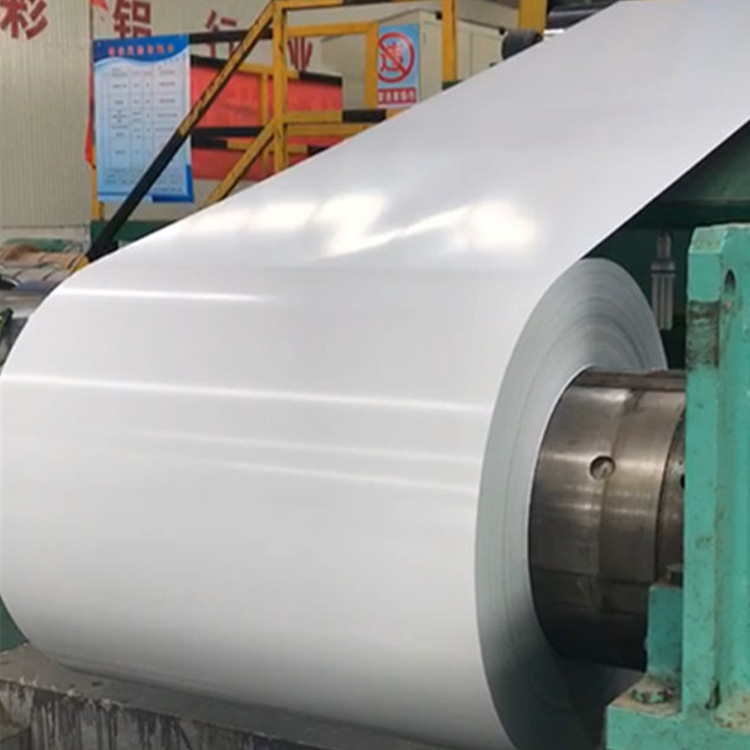
Sourcing industrial metals requires a delicate balance. You must constantly weigh material performance against cost efficiency and supply chain reliability. Metals form the backbone of modern production lines. While aluminum coil acts as a fundamental raw material across construction, automotive, and manufacturing sectors, its underlying nuances truly matter. Selecting the precise specifications directly dictates your project's overall viability. Mismatched material choices often compromise product lifespan and inflate operational budgets.
We created this comprehensive guide to help you systematically navigate these critical decisions. You will discover a robust technical and commercial evaluation framework here. This framework teaches you how to select the ideal alloy, determine the optimal surface finish, and vet a dependable supplier. By applying these insights, you can effectively mitigate procurement risks and ensure consistent manufacturing success.
Key Takeaways
Material alignment: Choosing the right alloy grade (e.g., 3003 vs. 5052) directly impacts formability, structural integrity, and project compliance.
Processing quality: Understanding the manufacturing process helps buyers spot critical quality indicators, such as gauge tolerances and edge conditions.
Finish implications: Specifying mill finish versus coated options requires weighing immediate cost savings against long-term environmental exposure.
Supplier vetting: A reliable supplier must offer transparent mill test certificates (MTCs), consistent lead times, and robust transit packaging.
The Role of Aluminum Coil Material in Industrial Applications
Mismatched material specifications often lead to severe manufacturing defects. You might experience cracking during bending operations. Premature field failure also occurs when environmental conditions exceed material limits. Choosing the right aluminum coil material solves these core business problems directly. Engineers must define clear success criteria for every project phase. This involves balancing strength-to-weight ratios against necessary corrosion resistance. Thermal conductivity also plays a vital role based on the end-use environment.
Different applications demand vastly different performance metrics. Architectural cladding requires high weatherability and wind-load resistance. Conversely, internal HVAC fins demand superior thermal transfer capabilities and rapid heat dissipation. Selecting a generic metal often leads to subpar performance in both scenarios.
Metals like steel offer higher baseline tensile strength. However, aluminum delivers distinct core advantages for modern industry. High recyclability appeals to sustainable manufacturing goals and green building certifications. Predictable machinability speeds up continuous production lines. You also benefit from exceptionally low maintenance requirements compared to heavier or more corrosive metals.
Common Mistake: Buyers frequently over-specify material strength. They assume harder metals yield better end products. This approach often reduces formability. It causes invisible micro-fractures during high-speed stamping operations.
The Aluminum Coil Manufacturing Process: Quality Indicators to Watch
Understanding the aluminum coil manufacturing process helps you spot critical quality indicators. Buyers use this knowledge as an evaluation lens for long-term risk mitigation. The production journey involves several highly precise steps. Each stage introduces potential variables.
Casting: Mills use Direct Chill (DC) casting or continuous casting technologies. They create large, uniform aluminum ingots or continuous sheets from molten metal.
Hot Rolling: Heavy industrial machinery heats the aluminum. It then flattens the ingot into a much thicker preliminary sheet.
Cold Rolling: Room-temperature rollers reduce the sheet to its final precise gauge thickness. This stage heavily influences the material's surface quality.
Slitting: Precision rotary blades cut the wide master coil into specific, narrow widths required by end-users.
You must monitor specific dimensional tolerances during this process. Variance in cold rolling negatively affects automated stamping operations. Roll-forming lines jam quickly when thickness fluctuates beyond acceptable margins. Even a variance of a few thousandths of an inch disrupts calibration.
Thermal treatment heavily impacts temper and hardness. Consistent annealing prevents material springback during fabrication. It ensures a uniform grain structure across the entire length of the coil. Without proper annealing, the metal behaves unpredictably during bending.
Slitting quality matters just as much as rolling precision. You need absolutely burr-free edges and tight coiling tension. Loose coils or rough edges cause snags in continuous feed manufacturing. This halts production, wastes raw material, and damages expensive forming dies.
Evaluating Aluminum Coil Grades for Your Project
Evaluating aluminum coil grades ensures you match solutions to project demands. The industry categorizes alloys into distinct series based on their primary chemical composition. Each series addresses different mechanical requirements.
The 1000 Series features commercially pure aluminum. Grades like 1050 and 1100 contain over 99% aluminum. They offer excellent thermal and electrical conductivity. However, they possess low mechanical strength. These alloys work best for chemical processing equipment, lighting reflectors, and intricate decorative trim.
The 3000 Series serves as the general-purpose standard across construction. Mills alloy these grades using manganese. This addition increases strength by roughly 20% over the 1000 series. Grades like 3003 and 3105 provide moderate strength and excellent formability. You will find them standard in roofing panels, rain gutters, and architectural trim applications.
The 5000 Series utilizes magnesium for significant structural enhancement. Grades like 5052 offer high tensile strength and exceptional marine-grade corrosion resistance. They resist saltwater spray effectively. These grades remain mandatory for structural panels, fuel tanks, and heavy transportation components.
Your selection framework must map specific formability needs accurately. Evaluate your required tensile strength and environmental exposure against specific alloy tempers. For example, an H14 temper (half-hard) differs significantly from an H24 temper (half-hard and partially annealed) regarding flexibility and crack resistance during tight radius bends.
Table Title: Comparison of Common Alloy Categories
Alloy Series
Primary Alloying Element
Key Characteristics
Typical Applications
1000 Series (e.g., 1050, 1100)
None (99%+ Pure Aluminum)
High conductivity, maximum formability, low strength.
Chemical equipment, heat exchangers, lighting reflectors.
Surface Treatments: Mill Finish Aluminum Coil vs. Coated Options
Surface treatments dictate both aesthetic appeal and long-term environmental resilience. Understanding these finishes prevents costly premature replacements.
What exactly is a mill finish aluminum coil? It presents a raw, untreated appearance straight from the rolling mill. You might notice light surface oxidation or very faint, visible rolling lines. This finish excels in hidden structural components. It functions perfectly for internal HVAC parts, chassis enclosures, and thermal barriers. It also works well for manufacturers who operate their own post-fabrication finishing lines. Cost efficiency remains the top priority in these specific use cases.
Coated and anodized alternatives serve entirely different purposes. Manufacturers apply specialized paint systems before the coil reaches your facility. Color-coated coils often use PE (Polyester) or PVDF (Polyvinylidene Fluoride) paint systems.
PE (Polyester) Coatings: Provide an economical, vibrant finish. They work best for interior applications or exterior settings with mild weather conditions.
PVDF Coatings: Contain exceptionally strong carbon-fluorine bonds. These are necessary for high-end architectural applications requiring intense UV resistance. They prevent fading and chalking on exterior building facades for decades.
You must evaluate this finish dimension carefully. Compare the upfront cost of pre-painted coil against in-house painting bottlenecks. Factor in the severe risk of mill finish oxidation in harsh coastal or industrial environments. Purchasing pre-painted material also eliminates volatile organic compound (VOC) emissions at your facility. This simplifies your environmental compliance reporting.
Chart Title: Mill Finish vs. Coated Finish Characteristics
Feature
Mill Finish
PE Coated
PVDF Coated
Visual Appearance
Raw, metallic, slight rolling lines
Glossy or matte, wide color variety
Premium matte or metallic, highly consistent
UV & Weather Resistance
Low (Prone to natural oxidation)
Moderate (Good for mild climates)
Exceptional (Ideal for harsh sun exposure)
Upfront Cost
Lowest
Moderate
Highest
How to Evaluate and Shortlist an Aluminum Coil Supplier
Partnering with the right aluminum coil supplier protects your entire production schedule. A reliable vendor actively demonstrates trustworthiness and strict industry compliance. They act as a strategic partner rather than just a transactional vendor.
Never procure raw materials without verifying Mill Test Certificates (MTCs). These essential documents confirm the exact chemical composition. They also detail the precise mechanical properties of your specific batch. You should demand ISO 9001 (Quality Management) and ISO 14001 (Environmental Management) documentation. This proves their structural commitment to manufacturing quality and sustainable environmental practices.
Implementation requires evaluating practical operational constraints. You must align supplier Minimum Order Quantities (MOQs) with your current inventory strategy. A Just-in-Time (JIT) manufacturing strategy requires significantly lower MOQs and frequent deliveries. Bulk warehousing approaches benefit from higher volume discounts but tie up capital.
Assess supplier packaging standards rigorously. Discuss "eye-to-sky" versus "eye-to-wall" palletizing orientations. Your choice depends entirely on your facility's forklift and crane handling capabilities. Moisture-barrier wrapping remains absolutely non-negotiable. Poor packaging leads directly to transit damage. You will face water stains, white rust oxidation, or severe edge denting. This renders the entire master coil unusable upon arrival at your dock.
Verify lead times and production scalability. Ask prospective partners about their domestic stock reserves versus international import transit times. Supply chains remain vulnerable to geopolitical shifts and port congestion. This transparency protects your daily operations against sudden material shortages.
Best Practices for Supplier Vetting:
Request small sample coils to test on your specific roll-forming machinery before placing bulk orders.
Verify the supplier uses ISPM-15 compliant wood packaging for all international shipments to avoid customs delays.
Establish clear tolerance agreements in writing regarding thickness, width, and camber before signing purchase orders.
Conclusion
Finalizing your metal procurement requires careful, multi-dimensional alignment. You must expertly match specific alloy grades, tempers, and surface finishes to your unique application demands. Long-term success also depends entirely on choosing a supplier who guarantees tight manufacturing tolerances and robust logistics. Every decision you make along this chain impacts production speed and final product quality.
We highly encourage you to take proactive next steps today. Request a material sample to test directly on your own production machinery. Review technical data sheets thoroughly alongside your engineering team. Schedule a comprehensive consultation with a qualified metallurgist or technical sales engineer. These specific actions help finalize your exact specifications and prevent costly procurement errors down the line.
FAQ
Q: What is the standard thickness for aluminum trim coil?
A: Aluminum trim coil typically ranges between 0.019" and 0.024" in thickness. The 0.019" gauge offers excellent flexibility for standard residential wrapping and intricate bending. The thicker 0.024" gauge provides enhanced dent resistance for demanding commercial applications or heavy-weather environments. Always verify your brake press capabilities before selecting a gauge.
Q: How is the weight of an aluminum coil calculated?
A: You calculate weight using a fundamental volume and density formula. Multiply the width, thickness, and total length to find the cubic volume. Then, multiply this volume by the density of aluminum, which is approximately 2.7 grams per cubic centimeter. Accurate weight calculations remain essential for optimizing shipping logistics and managing flatbed freight capacities.
Q: What is the shelf life of mill finish aluminum coil?
A: Mill finish coils generally maintain a shelf life of around six months when stored properly indoors. Long-term storage significantly increases natural oxidation risks, especially in humid or fluctuating environments. You must keep the material in climate-controlled warehousing. Always leave the original factory moisture-barrier packaging completely intact until production physically begins.
Shandong Sino Steel Co., Ltd. is a comprehensive company for steel production and trading. Its business includes production, processing, distribution, logistics and import& export of steel.