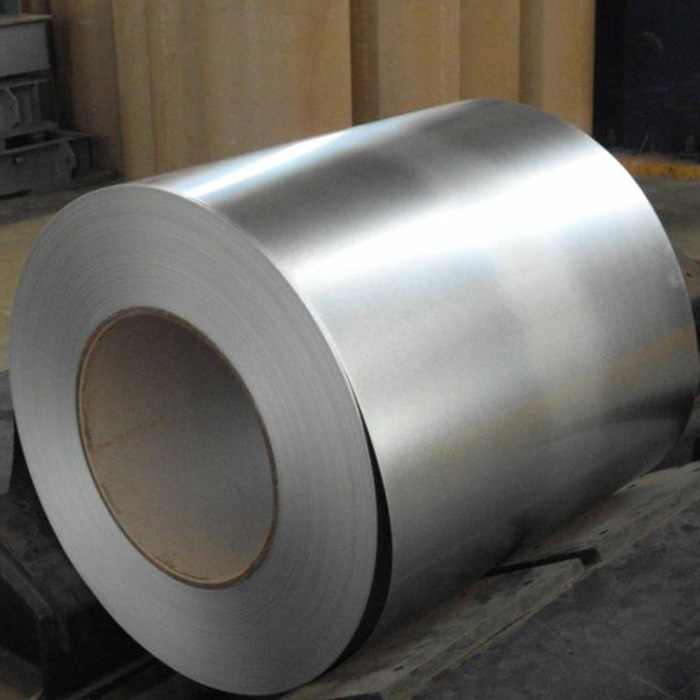
Sourcing materials for industrial manufacturing demands absolute precision. Selecting incorrect metal specifications often derails project timelines and compromises structural integrity. Procuring the wrong Galvalume specifications leads to premature corrosion, roll-forming failures, or unnecessary budget bloat on over-engineered materials. For industrial buyers, architects, and manufacturers, matching the exact metallurgical properties to the project environment is critical for lifecycle ROI. Relying on guesswork simply guarantees future failures in the field. To prevent this, procurement teams need a systematic approach to material selection.
This article provides a rigorous, engineering-grounded framework for defining your required specifications before submitting an RFQ to a mill or service center. You will learn how to evaluate coating weights, select the right structural grades, and verify supplier compliance seamlessly. Securing a reliable supply of Galvalume Steel Coil depends heavily on your initial RFQ clarity.
Key Takeaways
Coating is Contextual: Selection of AZ coating weight (e.g., AZ50 vs. AZ150) must align directly with the environmental corrosivity of the end-use application.
Formability vs. Yield: Higher structural grades sacrifice formability; buyers must balance mechanical yield strength with the physical limitations of their processing equipment.
Surface Prep Matters: Selecting the correct surface treatment (like AFP or passivation) dictates downstream paint adhesion and storage longevity.
Supplier Verification: Reliable procurement requires mandatory Mill Test Certificates (MTCs) and strict adherence to international standards (ASTM A792 or EN 10346).
Defining Your Galvalume Coil Specifications: The Evaluation Framework
Procuring metal without a strict evaluation framework invites significant operational risk. The cost of misalignment can devastate a project. Under-speccing causes catastrophic field failures. Red rust develops rapidly on under-protected surfaces. Edge creep undermines the structural integrity of roofing panels. Conversely, over-speccing drains procurement budgets needlessly. Specifying excessive coating weights for mild indoor environments wastes valuable capital. You must strike a precise engineering balance.
End-use mapping is your first line of defense. You must match the physical properties of the coil to its primary application. Standing seam roofing demands excellent weatherability and moderate flexibility. Agricultural silos require high yield strength to withstand internal load pressures. HVAC components demand specialized condensation resistance and tight bending capabilities. Every application requires a unique metallurgical profile. Buyers cannot rely on a one-size-fits-all approach.
Before contacting a mill, procurement teams must finalize a comprehensive RFQ. Missing data points lead to inaccurate quotes and delayed production. Standardizing your request ensures apples-to-apples vendor comparisons. You must define your precise galvalume coil specifications before opening negotiations.
The Mandatory RFQ Checklist:
Thickness: Specify Base Metal Thickness (BMT) or Total Coated Thickness (TCT).
Width: Detail exact dimensions and state whether you need mill-edge or slit-edge.
Grade: Clearly define the mechanical yield requirements (e.g., CS Type B or SS Grade 80).
Coating Weight: Dictate the AZ designation based on environmental exposure.
Surface Finish: Request specific passivation, AFP, or oiling treatments.
ID/OD Limits: Provide Inner Diameter and Outer Diameter maximums to ensure equipment compatibility.
Deciphering AZ Coating Weight Requirements
Understanding the AZ designation is fundamental to material performance. The "AZ" signifies an Aluminum-Zinc alloy coating. This alloy typically consists of 55% aluminum, 43.4% zinc, and 1.6% silicon. This specific ratio provides remarkable durability. Aluminum delivers long-term barrier protection against the elements. Zinc provides sacrificial galvanic protection at cut edges and scratches. Silicon binds the coating securely to the steel substrate. Manufacturers measure this coating weight in ounces per square foot (oz/ft²) or grams per square meter (g/m²).
Evaluating performance against cost requires assessing the installation environment. Selecting the correct AZ coating weight dictates the lifespan of the final product. Standard environments usually require an AZ50 or AZ55 designation. In metric terms, this equates to AZ150. These weights provide sufficient barrier protection for typical residential roofing and moderate industrial zones.
Chart: AZ Coating Weight Application Guide
Coating Weight (US)
Coating Weight (Metric)
Ideal Environment
Common Applications
AZ50
AZ150
Mild to Moderate / Inland
Residential roofing, HVAC ductwork, wall panels
AZ55
AZ165
Moderate / Light Industrial
Commercial building cladding, fencing
AZ60
AZ180
Aggressive / High Humidity
Agricultural buildings, heavy industrial zones
AZ70
AZ210
Severe / Coastal / Chemical
Coastal infrastructure, chemical processing plants
Aggressive environments require a different strategy. Buyers must justify the higher cost of AZ60 or AZ70 coatings (AZ180 or AZ200 metric). Coastal regions face constant salt spray. Chemical plants expose metals to corrosive airborne particulates. High-humidity environments accelerate oxidation. In these scenarios, heavier coatings prevent premature structural failure.
However, excessive coating weights carry significant implementation risks. Buyers often assume thicker coatings always perform better. This assumption ignores physical processing limits. The Aluminum-Zinc alloy is inherently harder than pure zinc. When manufacturers bend heavy AZ coatings around tight radii, micro-cracking occurs. These microscopic fractures expose the base steel to moisture. Rust develops rapidly within these cracks. You must balance the environmental need for heavy coatings against the geometric realities of your roll-forming profiles.
Selecting the Right Galvalume Steel Coil Grades
Mechanical properties dictate how the steel behaves during manufacturing. Buyers must balance yield strength, tensile strength, and elongation. Yield strength measures the stress required to permanently deform the steel. Tensile strength indicates the maximum stress the material can handle before breaking. Elongation measures the material's ability to stretch without fracturing. Getting this balance right prevents costly manufacturing delays.
You must choose between commercial and structural categories. Commercial Steel (CS Types A, B, and C) excels in basic profiling. These grades prioritize flexibility and formability. They accommodate complex shapes, deep drawing, and tight bends. Manufacturers use commercial grades for architectural trims, gutters, and intricate panels. The material flows easily through roll-forming equipment without excessive resistance.
Structural Steel (SS Grades 33, 37, 40, 50, and 80) serves an entirely different purpose. Load-bearing applications demand these high-strength grades. Structural decking, heavy-duty purlins, and agricultural frames rely on them. These grades resist deformation under heavy physical loads. However, this strength comes at the expense of formability. Higher structural grades lack the elongation necessary for complex profiling.
Matching the appropriate galvalume steel coil grades to your manufacturing capabilities is a critical decision factor. Selecting Grade 80 steel for a complex architectural panel guarantees failure. The material will resist bending. Springback will warp the final profile out of tolerance. Furthermore, running high-tensile steel through tooling designed for commercial grades causes severe wear. Your roll-forming dies will degrade rapidly. Always consult your production team before specifying high-yield structural grades.
Dimension Tolerances: Galvalume Steel Thickness and Width
Defining thickness accurately prevents massive compliance disputes upon delivery. Buyers often confuse Gauge, Base Metal Thickness (BMT), and Total Coated Thickness (TCT). Gauge is an archaic measurement system lacking modern precision. Modern engineering relies on decimal measurements. BMT refers exclusively to the raw steel core before any coating is applied. TCT includes both the steel core and the aluminum-zinc alloy layers. If your engineering plans require a 0.50mm BMT, but you order a 0.50mm TCT, your final product will lack the necessary structural steel mass.
Standard availability for galvalume steel thickness typically ranges from 0.12mm to 2.0mm. Thickness directly impacts structural integrity. Thicker materials support greater loads but increase overall project weight. This weight impacts logistical planning and installation labor. Furthermore, thickness dictates weight-per-square-meter calculations. Accurate calculations ensure you order enough linear footage to complete your production runs without budget overruns.
Width and slitting tolerances also require careful evaluation. Standard coil widths commonly range from 600mm to 1250mm. You must choose between mill-edge and slit-edge options. Mill edges remain exactly as they exited the production line. They occasionally feature minor irregularities. Slit edges undergo a secondary cutting process for exact precision. If your roll-forming equipment demands tight feeding tolerances, you must specify slit edges. This minimizes scrap waste during production and prevents jamming in the guides.
Common Mistakes in Dimension Specification:
Ordering by gauge instead of decimal BMT or TCT.
Failing to account for the thickness of the AZ coating layer.
Ignoring the maximum coil width capacity of the decoiler machine.
Accepting mill-edge coils for highly precise, narrow-profile roll forming.
Specifying Galvalume Surface Treatment and Finishes
Surface treatments protect the coil during transit and dictate future processing success. Bare galvalume is highly susceptible to white rust during storage. Chemical passivation mitigates this risk. Passivation applies a microscopic protective film over the coating. Chromated treatments offer robust protection but face increasing environmental restrictions. Non-chromated passivation provides a safer, RoHS-compliant alternative. It prevents white rust effectively while meeting modern environmental standards.
Anti-Fingerprint (AFP) resin coating offers immense value for unpainted applications. Handling bare metal leaves distinct, unsightly fingerprints. These marks oxidize and permanently stain the surface. AFP coatings prevent this handling damage. You can specify clear or tinted AFP. Beyond aesthetics, AFP acts as a dry lubricant. It allows the metal to slide smoothly through roll-forming dies without requiring wet oils.
If you intend to paint the material, you must choose between oiled and unoiled finishes. Buyers running the coil through immediate pre-painting lines (PPGL) must make this choice carefully. Oiled coils resist moisture during transit but require rigorous chemical cleaning before painting. Unoiled coils skip the degreasing step but risk corrosion if stored too long before the painting process begins.
Choosing the correct galvalume surface treatment prevents downstream failures. If you attempt to paint over a heavy AFP layer without proper chemical etching, the paint will delaminate. If you store unpassivated coils in a humid warehouse, white rust will destroy the surface. Align your surface finish specification strictly with your next manufacturing step.
Vetting a Galvalume Supplier: Compliance and Shortlisting Logic
Securing accurate specifications matters little if the supplier fails to deliver them. Rigorous vetting protects your investment. Quality assurance documentation is non-negotiable. Buyers must demand heat numbers for full material traceability. Verifiable Mill Test Certificates (MTCs) must accompany every shipment. These certificates prove the chemical composition, yield strength, and coating weight meet your exact RFQ requirements. Never accept delivery without reviewing the MTC.
International standard compliance serves as your benchmark for quality. Ensure your selected galvalume supplier manufactures strictly to recognized protocols. ASTM A792/A792M governs the North American market. EN 10346 serves the European standard. JIS G 3321 dictates Asian manufacturing tolerances. A reputable supplier will explicitly state which standard they follow. This guarantees the metallurgical properties remain consistent across multiple orders.
Logistics and packaging present major risk factors. A perfectly manufactured coil becomes scrap metal if damaged in transit. Evaluate the supplier's packaging standards meticulously. Eye-to-Sky packaging places the coil flat on a pallet, ideal for certain forklifts. Eye-to-Wall packaging stands the coil upright. Demand steel envelopes to protect the delicate edges from impact. Insist on VCI (Volatile Corrosion Inhibitor) paper wrapping. This specialized paper releases protective vapors to prevent moisture ingress during long ocean freights.
Transitioning to a new supplier requires structured next-step actions. Never place a massive bulk order immediately. Structure a pilot order first. Use this initial shipment to test gauge consistency across the entire coil length. Check the coating uniformity using electronic thickness gauges. Finally, evaluate their lead-time reliability and communication. A successful pilot order builds the foundation for a long-term procurement partnership.
Conclusion
Sourcing these materials remains a highly technical engineering decision, not merely a price negotiation. Precise metallurgical specifications dictate your final product's structural lifespan. Relying on vague orders guarantees inconsistent manufacturing results and potential field failures.
Procurement teams should adopt these immediate next steps:
Lock in exact combinations of grade, AZ weight, and thickness within all vendor contracts.
Mandate the inclusion of specific international manufacturing standards (like ASTM A792) in your RFQs.
Demand verifiable Mill Test Certificates prior to releasing final payments.
Consult with metallurgical experts when entering new, highly corrosive geographical markets.
Taking control of your specifications empowers your production line. We encourage buyers to submit detailed, highly structured RFQs to qualified service centers to secure accurate, reliable pricing.
FAQ
Q: What is the difference between Galvalume and Galvanized steel coils?
A: The primary difference lies in the coating composition. Galvanized steel uses a 100% pure zinc coating. Galvalume utilizes an Aluminum-Zinc alloy (55% Al, 43.4% Zn, 1.6% Si). Galvalume offers superior long-term corrosion resistance in harsh environments. However, pure Galvanized steel provides better galvanic protection at cut edges, whereas Galvalume edges may show slight rust earlier.
Q: How do I calculate the weight of a Galvalume steel coil?
A: You can calculate the weight using the standard density of steel (approximately 7.85 g/cm³). Multiply the width (in meters) by the thickness (in millimeters) by the length (in meters) by 7.85. This provides the total weight in kilograms. Many buyers rely on coil calculators provided by service centers for rapid estimations.
Q: Does Galvalume steel require a specific type of paint?
A: Yes. You cannot apply standard paints directly to bare metal. The surface requires proper chemical pretreatment to ensure adhesion. Manufacturers use specialized primers formulated for Aluminum-Zinc surfaces. For pre-painted applications (PPGL), high-performance polyester, SMP, or PVDF topcoats provide the best longevity and color retention.
Q: What does "spangle" mean in galvalume coil specifications?
A: Spangle refers to the visible, crystalline metallic pattern on the metal's surface, created as the coating cools. Regular spangle displays a distinct, flower-like pattern valued for unpainted aesthetic applications. Minimized spangle presents a smoother, more uniform finish. Minimized spangle is generally preferred when the coil will be painted, ensuring a flawless topcoat.
Shandong Sino Steel Co., Ltd. is a comprehensive company for steel production and trading. Its business includes production, processing, distribution, logistics and import& export of steel.