You can expect China to sell a lot of steel products in 2026. Chinese steel export levels will likely stay near 110 million tons. This is less than the highest point in 2025, but it is still a significant number. This change occurs because people in China need less steel. As a result, factories want to sell more steel products to other countries. You may see cheaper prices for steel items like galvanized steel and galvalume steel. The new export licensing system and trade barriers will alter how Chinese steel, including galvanized steel and galvalume steel, moves around the world.
Key Takeaways
China's steel exports will likely stay high in 2026, about 110 million tons, because people in China need less steel. New export licensing rules will change how steel is sold to other countries. These rules need contracts and quality checks for steel shipments. Trade barriers like tariffs and anti-dumping duties can make steel cost more. They also make it harder to sell steel, especially to the US and EU. New markets in Africa and the Middle East are now important for Chinese steel. This is because these places need steel for building projects. It is important for businesses to know about new trade rules and market changes. This helps them adjust and find new chances to grow.
Steel Export Growth Outlook 2026
Record Highs in Chinese Steel Exports
China will export a lot of steel in 2026. Experts think the amount will be between 109 and 120 million tons. This is a bit less than the record in 2025, which was over 115 million tons. The new export licensing system will change how steel leaves China. You can check the table below to see how much steel was exported in the last few years:
Year | Export Volume (Million Tons) |
2024 | 111.1 |
2025 | >115 |
2026 | 109-120 |
The world steel market is changing now. In January 2026, China’s weekly steel exports dropped by more than one-third from last year’s high point. This happened because new rules and stricter controls started to work. These changes will affect how countries trade steel in the future.
Key Drivers of Export Growth
There are several reasons why China’s steel exports are growing in 2026:
China’s economy is changing. People in China need less steel, so factories send more steel to other countries.
Many countries still want steel. They use it for building, making things, and big projects.
Automation and robotics help factories make steel faster and better. This lets China export more steel.
China is picking new places to send steel. The Belt and Road Initiative helps China find new buyers.
More cars and machines are being made. This means China sells more steel products.
The new export licensing system gives more control. This makes China send more semi-finished steel and focus on important markets.
Note: Watch how trade rules and tariffs change steel exports from China. Anti-dumping rules in places like Vietnam, Thailand, South Korea, and Brazil make it harder to sell hot-rolled coils. These trade barriers can lower the amount of steel China exports.
Main Export Destinations
The main places where China sends steel are changing in 2026. The world market is adjusting to new rules and trade barriers. China sells steel to many places, but some are now more important:
The Middle East and Africa want more steel from China. They need it for big building projects.
Southeast Asia is still a big market. But anti-dumping checks and tariffs in Vietnam and Thailand make it harder for China to sell some steel products.
The Belt and Road Initiative gives China new chances to sell steel. China focuses on these countries to grow its exports.
Buyers in Europe and South America still buy steel from China. But trade rules and laws change how much and what kind of steel they buy.
Because people in China want less steel, factories look for new buyers. The future of China’s steel exports depends on trade rules, tariffs, and new laws. You should watch these changes to see how the world steel market will shift.
Trade Barriers for Steel Exports from China
Global Protectionist Measures
Many countries try to protect their own steel businesses. They use tariffs, anti-dumping duties, and quotas to do this. These rules help local companies and keep prices steady. The United States and European Union put high tariffs on steel from China. India uses anti-dumping duties and supports its “Make in India” plan to help its steel makers. These actions make it harder for China to sell steel.
Chinese steel exports are still strong, even with these barriers.
Some countries, like Vietnam, buy less steel from China because of anti-dumping rules.
Exports to Southeast Asia and the Middle East have grown, especially for products not taxed.
Semi-finished steel exports from China went up by over 300% in the first five months of the year.
The US and EU use tariffs and anti-dumping checks to protect their markets, but this can cause more trade problems.
China’s lower need for steel at home means more steel is sent to other countries, so protectionist rules do not always work.
You can see how these rules work in the table below:
Country/Region | Policy Response | Strategic Approach |
United States | Section 232 tariffs on steel imports | National security, protect domestic industry |
European Union | Protective quotas and safeguards | Prevent oversupply, stabilize prices |
India | Anti-dumping duties, “Make in India” | Strengthen domestic production |
When the US uses anti-dumping rules, China sells less steel to America. At the same time, China sends more steel to other countries. These changes last a long time and affect jobs and factories.
China’s Export Licensing System
China started a new export licensing system for steel on January 1, 2026. If you want to export steel from China, you must follow strict rules. This system covers 268 customs tariff codes, including all stainless steel products. You need an export contract and a product quality inspection certificate from the factory. Each license lasts three months and is for one batch of steel.
Here is a summary of the main features:
Feature/Requirement | Description |
Implementation Date | January 1, 2026 |
Export License Requirement | Export contract and product quality inspection certificate needed |
Scope of Products | 268 customs tariff codes, all steel value chain, all stainless steel |
License Validity | Three months |
Administration Basis | One license per batch, for general trade exports |
Purpose | Standardize exports, safeguard domestic supply, ease trade frictions |
Nature of License | Approval process, not a quota or ban |
Compliance with Standards | No change to international standards (ASTM, EN, JIS) |
This new system does not set quotas or bans. It checks quality and paperwork before steel leaves China. China wants to control how much steel is exported and keep its own market steady. The system also helps lower trade problems with other countries.
Effects on Pricing and Lead Times
Trade barriers and the new licensing system change how you export steel from China. These rules affect prices and how long it takes to ship steel. When countries add tariffs or anti-dumping duties, prices can rise. You may also wait longer because of extra paperwork and steps.
Exporters now work hard to meet licensing rules.
Many companies team up to get the right quality papers.
Some exporters sell higher value-added steel to stay strong.
Smaller suppliers may stop selling because they cannot follow the new rules.
You can see how these changes affect exporters in the table below:
Evidence Type | Description |
Export License Requirement | Exporters must secure licenses for specific steel products, raising entry barriers. |
Supplier Consolidation | Market consolidation as smaller exporters struggle with quality certificates. |
Extended Lead Time | More administrative steps mean longer planning for exports. |
There is more competition and new problems in the world market. Trade rules and tariffs make you look for new buyers and change your plans. These barriers shape the future of China’s steel exports. You need to watch world rules and market changes to keep up.
Competitive Dynamics in Steel Export Markets
Major Global Competitors
There are many countries selling steel around the world. China sells the most steel, but other countries are strong too. India, Japan, South Korea, Turkey, and Russia are big competitors. Each country has its own way to help its steel business. India tries to grow at home and uses tariffs to protect its market. Japan and South Korea use better technology and make high-quality steel. Turkey and Russia change how much steel they sell based on world demand and trade rules. These countries affect the steel market and change how you plan to sell steel.
Price and Product Competition
The price of steel is very important for exports from China. Chinese steel costs less than steel from other big countries. This price difference changes the world steel market and what buyers do. For example, on August 1, China’s hot-rolled coil cost $495 per tonne. This was less than the $518 per tonne price on July 1. Turkish companies now buy cheaper Chinese billet, which shows the market is changing. When China sells steel for less, other countries must change their plans. Lower prices help China find new buyers, but it makes things harder for other sellers.
Technological and Efficiency Trends
Technology helps China do well in the steel market. Chinese companies use new ways to work faster and save money. Some new things they use are hydrogen-based steelmaking to cut emissions, carbon capture to meet world rules, and more recycling with electric arc furnaces. They also use AI and automation to fix problems before they happen and work better. These changes help China compete and follow world environmental rules. They also help China sell more steel and deal with new problems. By using new technology, China can keep up with changes in the market and trade rules.
Tip: Keep learning about new technology and market changes. Knowing this helps you do better in the world steel market and handle competition.
Shifts in Global Supply Routes
Changing Trade Flows
In 2026, the way steel moves around the world is changing a lot. The EU’s Carbon Border Adjustment Mechanism (CBAM) adds a carbon fee to steel imports. This rule makes it cost more to send steel from China to Europe. Many Chinese companies are cutting carbon emissions by 30-40%. These changes help them follow CBAM rules and may help them later. The CBAM makes people think about more than just price or how much steel they sell. Now, companies must care about market access, product quality, and following new rules. The world steel market is split up and depends on new policies. You have to watch for new tariffs and rules that can change your plans fast.
The CBAM makes Chinese steel more expensive in Europe.
China’s green steel helps meet new world standards.
Companies now compete by following rules and showing good products.
Emerging Markets for Chinese Steel Exports
China is selling more steel to new countries. Many places in Asia, Africa, and South America are buying a lot more steel now. The table below shows how much more steel these countries are buying:
Country | Increase in Exports |
Vietnam | Doubled |
India | Tripled |
Brazil | Quadrupled |
Turkey | Increased sixfold |
Saudi Arabia | Increased eightfold |
Nigeria | Doubled |
Peru | Doubled |
Guatemala | Doubled |
Ecuador | Doubled |
Honduras | Doubled |
Dominican Republic | Doubled |
Egypt | Tripled |
Colombia | Tripled |
Tanzania | Tripled |
Djibouti | Quadrupled |
Saudi Arabia, Turkey, and Brazil are now very important buyers. These countries need steel for big building jobs and new roads. China’s exports to these places show that the world wants steel in new ways.
Logistics and Transportation Impacts
There are new problems and chances in moving steel as supply routes change. Faster shipping and better technology now cut project times by half. Companies save money because machines and computers help make steel. Steel buildings are easier to change or make bigger, so you can meet new needs. Prefabricated systems let you get ready and build at the same time, so work goes faster.
Benefit | Description |
Speed Advantage | Project times are 30–50% shorter, so you can sell faster. |
Cost Efficiency | Making steel costs less because of machines and big factories. |
Flexibility | Steel buildings can be changed or made bigger easily. |
Time-to-Operation | Prefab lets you finish jobs faster. |
Even though China sells more steel, export money is going down. This means you need to watch both costs and how you reach markets. World rules, new tariffs, and trade laws will keep changing your plans. You must pay attention to these changes to keep your steel business strong.
Domestic Factors Influencing Steel Export Growth
Declining Steel Demand in China
Steel demand in China is going down. This change affects how much steel is sold worldwide. Chinese factories now make less steel for people in China. They try to find new buyers in other countries. The table below shows that steel demand is dropping:
Year | Forecasted Decline in Steel Demand (%) |
2025 | 2.0 |
2026 | 1.0 |
Steel production numbers also show this drop:
Year | Steel Production (Million Tons) | Year-on-Year Change (%) |
2025 (Jan-Sep) | 746.3 | -2.9 |
2025 (September) | 73.5 | -4.6 |
The China Iron and Steel Association says this trend will keep going during the 15th five-year plan. This means less steel stays in China. More steel is sent to other countries. You will see this affect steel exports and trade around the world.
Policy and Environmental Regulations
China has strict rules for making and selling steel. These rules help the country protect the environment and handle money problems. Only steel companies with the best emission ratings can skip some rules. Local leaders cannot let new steel plants open unless they follow hard rules. The table below explains these rules:
Regulatory Measure | Description |
Export Licensing System | Changes from open exports to a license system for 300 steel products to control supply and extra steel. |
Environmental Regulations | Limits steelmaking to fight smog, supports low-energy products, and bans energy-heavy exports. |
China also has special plans to lower carbon emissions. These plans decide how much steel companies can make. The table below shows more about these actions:
Initiative | Impact |
Special Action Plan for Energy Conservation | Cuts carbon emissions and changes how much is made based on emission levels. |
Restrictions on New Steel Plants | Stops new plants unless they meet environmental standards. |
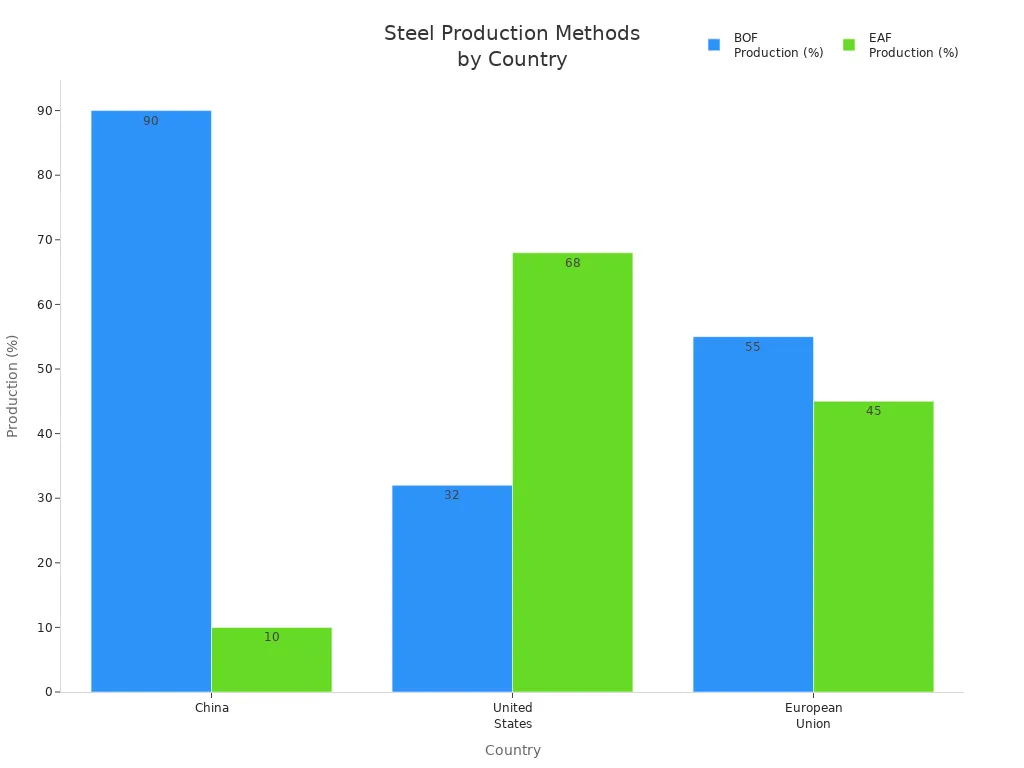
You can see how China’s way is different from other steel-making countries. The chart below shows how China, the United States, and the European Union use different ways to make steel:
China uses older methods more, while other countries use more electric arc furnaces. These differences change the world market and bring new problems for trade.
Iron Ore Imports and Supply Chain Effects
You might think less steel demand means China buys less iron ore. But China still imports a lot of iron ore to keep up with high steel exports. This keeps prices high around the world. The table below shows the numbers:
Year | Iron Ore Imports (Billion Tons) | Steel Exports (Million Tons) |
2025 | 1.26 | 119 |
When the quality of each tonne drops, the amount of tonnes needed to keep the furnaces running does not drop as much as crude steel. Even if official steel production goes down, ore imports can stay above 100 million tonnes a month, and port stocks can grow, without this being a problem for a weaker steel market.
China’s plan is to focus on selling steel to other countries. High iron ore imports help keep steel production strong for exports. This helps China stay important in the world economy and shapes the steel market everywhere. You should watch these supply chain effects because they change prices, tariffs, and trade rules around the world.
Strategic Outlook for 2026 and Beyond
Adaptation by Chinese Steel Producers
Chinese steel companies are changing how they work to stay strong. Many are building low-carbon steel plants in other countries. They spend money on better supply chains to follow new climate rules. These steps help them meet rules like the EU’s Carbon Border Adjustment Mechanism. Factories in China now care more about quality and following the rules. The new export license policy means they must use good inspection systems. Producers are making more high-value, low-carbon steel products. This helps make the supply chain easier to manage and stops unfair competition. The new rules push out cheap, low-quality suppliers. You will see a market that is more stable and focused on green manufacturing.
Implications for Global Buyers
If you buy steel from China, you may face new problems and chances. Shipments without the right license can get stuck at customs. This can slow down your projects. It costs more to follow the new rules, so steel prices may go up in 2026. Some suppliers may leave the market if they cannot follow the rules. This means you have fewer choices if you want the lowest price. There may be less steel in Asia for a short time. Changes in rules can move trade to other places. Other countries may get new chances to sell steel when China exports less. You need to watch these changes and change your plans if needed.
Long-Term Risks and Opportunities
You should think about what could go wrong or right in the future. China is making less crude steel, which shows a change in what they make. Less rebar means construction is slowing down and factories are making more valuable steel. New export licensing and anti-dumping rules can make trade harder. These rules may hurt China’s ability to sell steel to other countries. Experts think people in China will use less steel. Steel exports will help balance the world market. You need to watch world rules, tariffs, and trends to handle risks and find new chances.
You saw china reach a record 119.02 million tons in steel export, with iron ore imports also at new highs. This growth happened even as other countries raised trade barriers and new licensing rules changed the market. Shifting supply routes now shape where steel goes and how fast it moves. To stay ahead, you should look for new supplier markets, adjust your product mix, and use real-time tools to track tariffs. Staying flexible helps you manage risks and find new chances in the changing steel world.
FAQ
What is the new export licensing system for Chinese steel?
You need a license before you can send steel from China. This license checks your contract and if your steel is good. It covers many types of steel and lasts three months. The system helps control how much steel leaves China and keeps the market steady.
How do trade barriers affect steel prices?
Trade barriers like tariffs and anti-dumping duties can make steel cost more. You might pay extra because of more fees and paperwork. These rules also make it harder and slower to buy steel.
Which countries buy the most Chinese steel in 2026?
The biggest buyers are in the Middle East, Africa, and Southeast Asia. Countries like Saudi Arabia, Turkey, and Vietnam buy a lot of steel. The table below shows the main places:
Region | Major Buyers |
Middle East | Saudi Arabia |
Southeast Asia | Vietnam, Thailand |
South America | Brazil |
What should you watch for when importing Chinese steel?
Always check the newest trade rules and license needs. Make sure your supplier has all the right papers. If you miss a step, your order can be delayed. Stay updated on tariffs and quality rules.