Finding a static price tag for an aluminum coil rarely happens in today's dynamic metals market. Commodity fluctuations and highly customized manufacturing specifications constantly shift the final numbers. You simply cannot browse a standard catalog and pick a flat rate. Buyers face a serious procurement challenge every single day. You must balance exact project specifications against strict budget constraints. Meanwhile, you need to avoid hidden logistics fees and unexpected processing markups creeping into your invoices. This article provides a transparent, decision-stage framework to help you accurately calculate costs. We will show you how to vet suppliers effectively before you ever request a formal quote. Read on to master the math behind raw material pricing and protect your project margins.
Key Takeaways
Pricing is dynamic and primarily based on a two-part formula: the fluctuating LME (London Metal Exchange) base price plus the supplier's fabrication fee.
An aluminum coil price per ton typically ranges widely based on alloy grade (e.g., 1000 series vs. 5000 series marine grade).
Aluminum coil thickness, width, and surface treatments (like color coating or anodizing) are the heaviest variables in processing costs.
Hidden procurement risks include high shipping costs for low-volume orders, minimum order quantities (MOQs), and material scrap rates from loose manufacturing tolerances.
The Standard Pricing Formula: Deconstructing the Cost
The Baseline Equation
Buyers often struggle to understand complex metal quotes. Industrial pricing relies on a highly specific mathematical structure. You can break down the total cost into three primary pillars. The baseline equation always looks like this: Total Cost = (LME Aluminum Ingot Price) + (Fabrication/Processing Premium) + (Logistics/Taxes). Understanding this simple equation protects you from overpaying. It allows you to isolate exactly where a supplier might hide unnecessary markups.
LME Base Price (The Variable)
The LME (London Metal Exchange) base price acts as the variable core of your quote. Global commodity markets dictate this baseline rate daily. Traders calculate it per metric ton or per pound based on real-time supply and demand. Market shocks, energy crises, and international trade policies shift these numbers constantly. Reliable suppliers always use transparent, timestamped LME data when drafting your quote. This transparency builds crucial trust. You should always demand to see the specific LME timestamp date on any formal estimate.
The Fabrication Premium (The Differentiator)
The fabrication premium serves as the major differentiator among various suppliers. Raw aluminum ingots require significant mechanical work. A mill or regional service center must roll, slit, and treat the raw metal. They transform rough blocks into a highly functional product. Complex rolling mills consume massive amounts of electrical energy. Highly specialized labor also drives up this premium. The complexity of your specific order dictates how much the mill charges for this transformation step.
Primary Aluminum Coil Cost Factors
Several physical specifications directly impact your final invoice. We call these the primary aluminum coil cost factors. You must define your needs carefully before purchasing. Let us examine the core variables driving your costs.
Alloy Selection
Alloy selection sets your foundational expense level. Different chemical compositions require entirely different processing intensities. Commercial pure alloys belong to the 1000 series. These carry the lowest baseline cost in the industry. They lack complex hardening elements. General-purpose alloys, like 3003 and 3105, sit comfortably in the mid-range. Manufacturers use these widely for residential roofing and exterior trim. High-strength marine grades, such as 5052 or 6061, always command premium pricing. They contain complex alloying elements like magnesium and silicon. These tough elements demand much more energy and time during the rolling process.
Table 1: Common Alloy Categories and Cost Profiles
Alloy Series
Common Grades
Relative Cost Level
Primary Alloying Element
Typical Industrial Applications
1000 Series
1050, 1100
Low
None (99% Pure)
Chemical equipment, heat exchangers, reflectors
3000 Series
3003, 3105
Medium
Manganese
Roofing, siding, gutters, cooking utensils
5000 Series
5052, 5083
High
Magnesium
Marine environments, pressure vessels, transport
6000 Series
6061, 6082
Premium
Magnesium & Silicon
Structural framing, automotive panels, aerospace
Aluminum Coil Thickness and Width
Physical dimensions also change the final price drastically. Aluminum coil thickness and width generally follow an inverse cost rule. Producing extremely thin foils requires extended rolling time. Manufacturers must pass the metal through the cold mill multiple times. Tighter machine calibration increases the fabrication premium significantly. Highly specific non-standard widths also cost more money. Operators must stop the line and manually adjust the slitting blades for custom widths. Standard widths run continuously, keeping costs lower.
Surface Treatments and Finishes
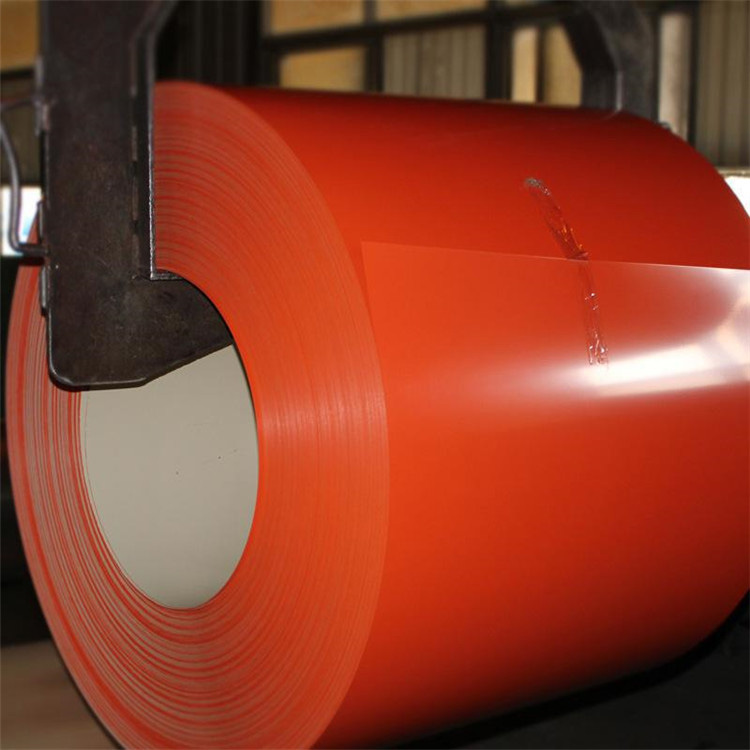
Surface treatments and external finishes add another distinct layer of expense. A bare mill finish always costs the least. The metal simply cools and rolls into its final shape. Pre-painted finishes using PVDF (polyvinylidene fluoride) or PE (polyester) coatings require extensive secondary processing. Automated paint lines must clean, chemically prime, and bake the metal. Embossed textures or anodized finishes also increase the fabrication premium heavily. They provide superior weather resistance but require specialized facility capabilities to produce correctly.
Best Practice: Always match the alloy grade directly to your exact environmental needs. Over-specifying a marine-grade alloy for basic indoor trim wastes budget quickly.
Common Mistake: Ignoring the inverse thickness rule. Specifying a material slightly thinner than necessary can unexpectedly spike your fabrication premium due to extra rolling passes.
Standard vs. Custom Coils: Matching Application to Budget
Every industrial buyer must choose between standard and custom products. Your end-use application entirely dictates this choice. Each path carries completely different financial implications for your business.
Standard Off-the-Shelf Coils (Contractor Grade)
Standard off-the-shelf options cater primarily to general contractor grades. They work best for straightforward, low-stress applications. You typically see them used as gutter materials or standard exterior trim. They naturally carry a lower cost per ton. Regional distributors keep them readily available in local warehouses. You also benefit from minimal minimum order quantities (MOQs). Standard sizing keeps supply chains moving quickly. Buyers can usually procure standard dimensions within a few days rather than waiting weeks for a mill run.
Custom Rolled Coils (Industrial/OEM Grade)
Custom rolled products serve highly demanding industrial and OEM grade applications. Engineers require them for sensitive manufacturing environments. These applications demand extremely tight tolerances and specific temper conditions. They often involve highly non-standard slitting widths. Custom orders command a significantly higher initial processing cost. The mill must retool production lines specifically for your batch. However, this upfront investment drastically reduces downstream scrap rates. Precision metal prevents machine jamming on your internal production line. Ultimately, custom sizing improves your factory's daily operational yield.
Review your internal machine tolerance limits before ordering.
Calculate your average monthly material scrap rate on standard metals.
Compare the higher upfront custom cost against your current scrap losses.
Hidden Procurement Costs and Implementation Risks
Inexperienced buyers often obsess over the baseline quote alone. They forget to calculate hidden procurement costs entirely. Unplanned implementation risks can destroy a project budget rapidly.
Volume and MOQs
Order volume heavily dictates your final invoice. Purchasing a wholesale aluminum coil significantly reduces the unit rate. Large orders maximize mill efficiency and reduce setup times. We strongly warn against small-batch purchases. Premium markups apply heavily to fractional orders. Suppliers often charge 20 to 40 percent more for low-volume requests. The aluminum coil price per ton drops drastically when you meet full truckload minimums. Consolidating your monthly orders helps you reach these lucrative bulk thresholds.
Freight and Logistics
Freight and logistics introduce another massive financial variable. Shipping heavy, cylindrical metal requires highly specialized transport methods. Carriers use custom flatbed trailers. They require heavy-duty blocking, wood bracing, and steel banding to prevent rolling. Distance from the producing mill drastically impacts your fully landed cost. Moving metal across the entire country quickly erases any savings from a cheap initial quote. Localized sourcing often proves more economical despite slightly higher base material prices.
Yield and Scrap Risk
Yield and scrap risk represent the silent budget killers in metal procurement. Buying cheap metal often yields exceptionally poor edge quality. Inconsistent thickness across the width leads to rejected final products. Your internal stamping machines might jam, misfire, or break entirely. Wasted material goes straight into your scrap bin at a massive loss. You pay full price for metal you cannot sell. Always calculate the true usable yield before selecting the cheapest supplier on paper.
How to Evaluate an Aluminum Alloy Coil Supplier
Vetting your metal source requires strict operational diligence. You must look far beyond the initial sales pitch. We recommend evaluating partners across four critical categories to ensure long-term success.
Pricing Transparency
First, demand absolute pricing transparency from day one. A trustworthy aluminum alloy coil supplier breaks down their quotes completely. They clearly separate the fluctuating LME base price from their internal fabrication premium. They also isolate packaging and freight charges on the formal quote. If a vendor refuses to itemize these costs, consider it a major red flag.
Tolerance Capabilities
Second, assess their internal tolerance capabilities. Check if the supplier can guarantee specific dimensional tolerances in writing. Do not accept broad, industry-minimum standards for sensitive stamping projects. Precision matters deeply during continuous manufacturing runs. Ask detailed questions about their edge slitting accuracy. Inquire about their thickness consistency across the entire master roll.
Supply Chain Stability
Third, evaluate their overall supply chain stability. Investigate their typical manufacturing lead times. Ask about their current warehouse inventory buffer capacity. You must know if they operate as a direct producing mill, a regional service center, or merely a broker. Brokers add another unnecessary markup layer to your invoice. Direct relationships generally offer better communication and faster problem resolution.
Quality Documentation
Finally, demand rigorous quality documentation for every single shipment. Always look for updated ISO manufacturing certifications. Request physical mill test reports (MTRs) for your specific batches. These standardized documents guarantee the exact chemical composition of the metal. They rigorously verify the mechanical yield and tensile properties you actually paid for. Without an MTR, you cannot verify the grade.
Conclusion
Securing a reliable metal supply requires strategic thinking and careful math. The cheapest initial quote rarely equals the most cost-effective solution overall. High freight costs, poor material yield, and inflexible MOQs destroy perceived savings rapidly. Always calculate the fully landed cost before making a final purchasing decision. Prioritize suppliers who offer complete pricing transparency and high-quality production standards.
Before reaching out for a formal quote, gather your exact operational parameters. Document your required alloy, temper condition, physical thickness, and exact width. Estimate your expected annual tonnage to negotiate much better volume discounts. Clear technical requirements eliminate guesswork for the supplier and speed up the quoting process.
Ready to secure reliable pricing for your next manufacturing project? We invite you to compile your specific technical specifications today. Reach out to a vetted supplier to request a transparent, itemized quote tailored specifically to your production needs.
FAQ
Q: Why is the aluminum coil price per ton different today than it was last month?
A: The base price relies heavily on the London Metal Exchange (LME). This global commodity market fluctuates daily based on international supply, demand, energy costs, and geopolitical trade policies. These macro factors cause your per-ton quotes to shift continuously month over month.
Q: Can I buy less than a full aluminum coil?
A: Yes, but it costs significantly more per pound. Most mills enforce strict minimum order quantities (MOQs). For small projects, purchasing slit coils or flat cut sheets from a local service center often proves much more economical than ordering a fractional roll.
Q: Does aluminum coil thickness affect shipping costs?
A: Freight relies primarily on total total weight and physical volume. However, thinner materials remain highly vulnerable to transit damage. They often require much more protective packaging, custom skids, and core reinforcement. This specialized packaging can slightly increase your overall logistics invoice.
Q: What is the difference between mill finish and painted aluminum coil pricing?
A: A mill finish represents the raw, uncoated metal straight off the rolling line. Painted products require extensive secondary processing. Paint lines must chemically clean, prime, coat, and bake the metal. This added labor, energy, and chemical cost creates a significantly higher fabrication premium.
Shandong Sino Steel Co., Ltd. is a comprehensive company for steel production and trading. Its business includes production, processing, distribution, logistics and import& export of steel.