Stainless steel is a mix of iron and other metals. It has at least 10.5% chromium. This makes it very strong and helps it resist chemicals.
Stainless steel does not rust easily. It can handle heat well. It lasts a long time and is easy to keep clean. These features make
stainless steel great for building and factories.
In 2022, people made about 55.3 million metric tons of stainless steel. In 2023, the world market was worth $186.24 billion. Big industries that use it are construction, cars, home products, energy, and machines.
Stainless steel is strong and can be recycled. You can find it in many things. If you want to know what stainless steel is used for, Our Company can show you its many uses.
Key Takeaways
Stainless steel is a strong metal. It does not rust or corrode because it has chromium. This helps it work well in kitchens and for medical tools.
It is simple to clean and take care of. This keeps surfaces clean and safe for food and medical use.
Stainless steel can handle high heat. This makes it good for cooking tools and big machines.
The metal can be recycled. This helps the environment by cutting down on trash and saving resources.
There are different kinds of stainless steel, like austenitic and martensitic. They are used for many things, such as kitchen items and surgical tools.
What Is Stainless Steel
Definition and Composition
You might wonder why stainless steel is special. Stainless steel is made from iron and at least 10.5% chromium. Some groups say it should have at least 11% chromium. The chromium makes a thin, invisible layer on top. This layer can fix itself if it gets scratched. So, stainless steel does not rust or corrode easily, even in hard places.
Stainless steel has more than just iron and chromium. Makers add other things to make it better. Here is what you will find in stainless steel:
At least 10.5% chromium
Iron is the main part
Nickel helps it bend and stops it from oxidizing
Molybdenum gives it more strength and stops rust
Carbon, silicon, manganese, phosphorus, sulfur, and titanium help in different ways
Each part helps stainless steel be strong, last long, and stay clean. You use these good things every time you use stainless steel at home or work.
Difference from Regular Steel
You may wonder how stainless steel is different from regular steel. The answer is in what is inside and what it does. Regular steel, also called carbon steel, is mostly iron and carbon. Stainless steel has chromium and sometimes nickel, which changes how it works.
Here is a simple table to show the difference:
Material | Major Alloying Elements |
Stainless Steel | Iron, Chromium, Nickel, and others |
Carbon Steel | Primarily Carbon |
Stainless steel is better because it does not rust or get damaged by heat. The chromium makes a shield, so you do not worry about stains or rust. Nickel helps make it easy to shape and join. Regular steel does not have these good points. It rusts fast and needs more care.
Stainless steel is less magnetic and easier to keep clean. You see it in food factories, hospitals, and places that need to be clean. Regular steel is good for building and cars but needs help to stop rust.
Tip: If you want something that lasts and stays clean, pick stainless steel.
Key Properties of Stainless Steel
Stainless steel is special because it has many good qualities. These make it a great choice for lots of things, like kitchen tools and medical gear. Stainless steel works well even in hard places. Let’s see what makes stainless steel a smart pick for your next project.
Corrosion Resistance
Corrosion resistance is the best thing about stainless steel. You want things that last and do not rust. Stainless steel does this because it has chromium. When air touches stainless steel, chromium makes a thin layer on top. This layer keeps water, air, and chemicals away from the metal.
If you scratch it, the layer fixes itself. This means stainless steel stays strong even if it gets hurt. More chromium means better protection from rust. That is why stainless steel is good for wet or salty places.
Here is a table that shows how stainless steel fights rust:
Mechanism | Description |
Chromium Oxide Layer | Makes a shield on the surface when it meets air, stopping rust and damage. |
Self-Healing Property | If the shield breaks, chromium makes it again when air is around. |
Higher Chromium Content | More chromium means better rust protection. |
You can see how stainless steel does in different places. The rust rates stay low, even in tough spots:
Type of atmosphere | Corrosion rates (mpy) | Comments |
Rural | 0.20 – 0.39 | Measured in Eastern and Western Europe |
Urban | 0.39 – 1.18 |
|
Industrial | 1.18 – 2.36 |
|
Marine | 0.39 – 1.57 | Measured after 4 years in Scandinavia |
Arctic | 0.16 | Measured after 4 years in northern Sweden |
304 stainless steel rusts only about 0.03 mm each year. This is much less than carbon steel, which rusts fast. Stainless steel works well in cities and near the sea. It is great for bridges, boats, and things outside.
Note: Stainless steel also stands up to acids and bases. You can use it in chemical plants and food factories without worry.
Heat Resistance
Heat resistance is another great thing about stainless steel. You need things that can take heat and not get weak. Stainless steel keeps its shape and strength when it gets hot. That is why people use it for ovens, engines, and big machines.
Different types of stainless steel can take different heat levels. Here is a table that shows how much heat some types can handle:
Grade | Temperature Range (°F) | Melting Point (°F) | Notes |
304 | 1,598 - 1,697 | 2,550 - 2,650 | Gets weaker at very high heat |
316 | Slightly lower than 304 | 2,500 - 2,550 | Better at fighting rust than 304 |
If you look at other metals, stainless steel can take more heat:
Metal Type | Heat Resistance (°C) | Melting Point (°C) |
Stainless Steel | 750-1550 | N/A |
Aluminum | N/A | 660 |
Carbon Steel | N/A | N/A |
Stainless steel can take more heat than aluminum. You can use it where things get very hot. It also keeps its shield when heated. Stainless steel does not break down or lose its layer.
Tip: If you need pans, grills, or engine parts, pick stainless steel for heat and strength.
Strength and Durability
You want things that are strong and last long. Stainless steel is very strong and tough. It can hold heavy things and does not bend or snap easily. This makes it good for buildings, bridges, and hospital tools.
Here is a table that shows how strong some types are:
Stainless Steel Grade | Tensile Strength (ksi) | Yield Point (ksi) |
303 | 75-90 | 30-40 |
304 | 75-90 | 30-40 |
Tensile strength means how much pull it takes to break. Yield point is when it starts to bend. Stainless steel is strong and lasts a long time, so it is safe for big jobs.
It also stands up to acids and bases. This means it does not get weak from chemicals. You can use it in labs, factories, and hospitals.
Stainless steel is strong and does not rust. It lasts for years with little work.
Hygiene
Hygiene is a big reason you see stainless steel in kitchens and hospitals. The smooth surface does not let germs or dirt stick. You can wash it with soap and water. This makes it great for medical tools, food work, and clean places.
Stainless steel does not rust or stain. This keeps your tools looking new and safe to use.
Medical tools made from stainless steel are easy to clean. This keeps people safe from germs.
Recyclability
Recyclability is one of the best things about stainless steel. You can recycle it many times and it stays strong. This helps the earth and saves resources.
When you recycle stainless steel, you make less trash and use less energy. Most stainless steel things have recycled parts. This makes it a good choice for builders and makers.
Stainless steel is strong, does not rust, and is good for the planet.
Types of Stainless Steel
Stainless steel has many types. Each type is good for certain jobs. You can pick the best one if you know what each does well.
Austenitic
Austenitic stainless steel is used in lots of places. It has a face-centered cubic (FCC) structure. This type is not pulled by magnets. You can bend and shape it without much effort. It has the best corrosion resistance of all types. You see it in kitchen sinks, food machines, and medical tools. It is strong and keeps a clean surface. You can weld it easily. It costs more, but it works very well.
Tip: Pick austenitic if you want stainless steel that does not rust and is easy to keep clean.
Ferritic
Ferritic stainless steel has a body-centered cubic (BCC) structure. It is magnetic. It gives good corrosion resistance, but not as much as austenitic. Use ferritic stainless steel where you do not need the highest protection. It costs less and is easy to cut and shape. It is harder to weld and not as tough as austenitic.
Here is a table to compare ferritic and austenitic stainless steel:
Feature | Ferritic Stainless Steel | Austenitic Stainless Steel |
Crystal Structure | Body-centered cubic (BCC) | Face-centered cubic (FCC) |
Magnetism | Magnetic | Non-magnetic |
Corrosion Resistance | Good, but lower | Superior |
Ductility and Toughness | Lower | Higher |
Weldability | More challenging | Better |
Cost | More cost-effective | More expensive |
Applications | Less demanding environments | High-performance applications |
You find ferritic stainless steel in car exhausts, kitchen tools, and building trims. It is good for heat exchangers and food work because it handles heat and is easy to clean.
Martensitic
Martensitic stainless steel is known for being very hard. You can make it even harder with heat. It has more carbon, so it is strong but can break more easily. It gives medium corrosion resistance, not as high as the other types. You see martensitic stainless steel in tools and parts that must stay sharp or strong.
Here are some main features of martensitic stainless steel:
Very hard
Can break more easily
Medium corrosion resistance
High tensile strength
You use martensitic stainless steel for knives, surgical tools, engine parts, and pumps. It is good when you need a sharp edge or strong wear resistance.
Note: If you need stainless steel for knives or machine parts, martensitic is a smart choice.
Applications of Stainless Steel
Stainless steel is used in many places. It is strong and does not rust. You can clean it easily. That is why people use it for many things. You see stainless steel at home and in big factories. Let’s find out how you use it every day and in big jobs.
Everyday Uses
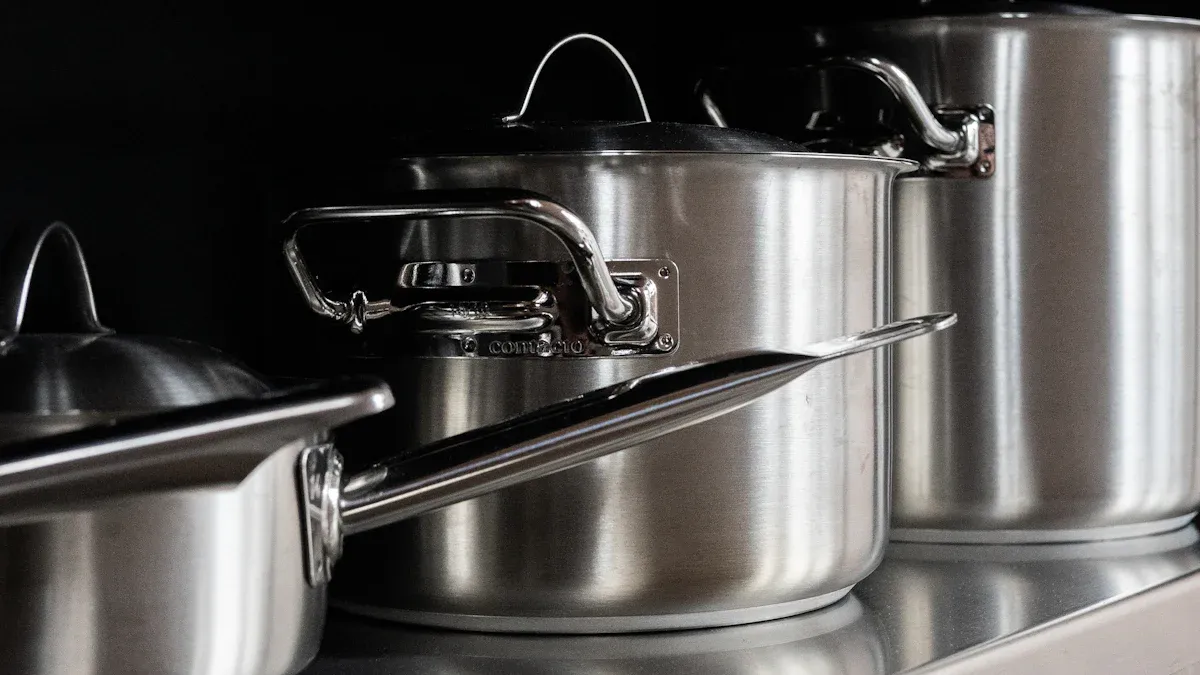
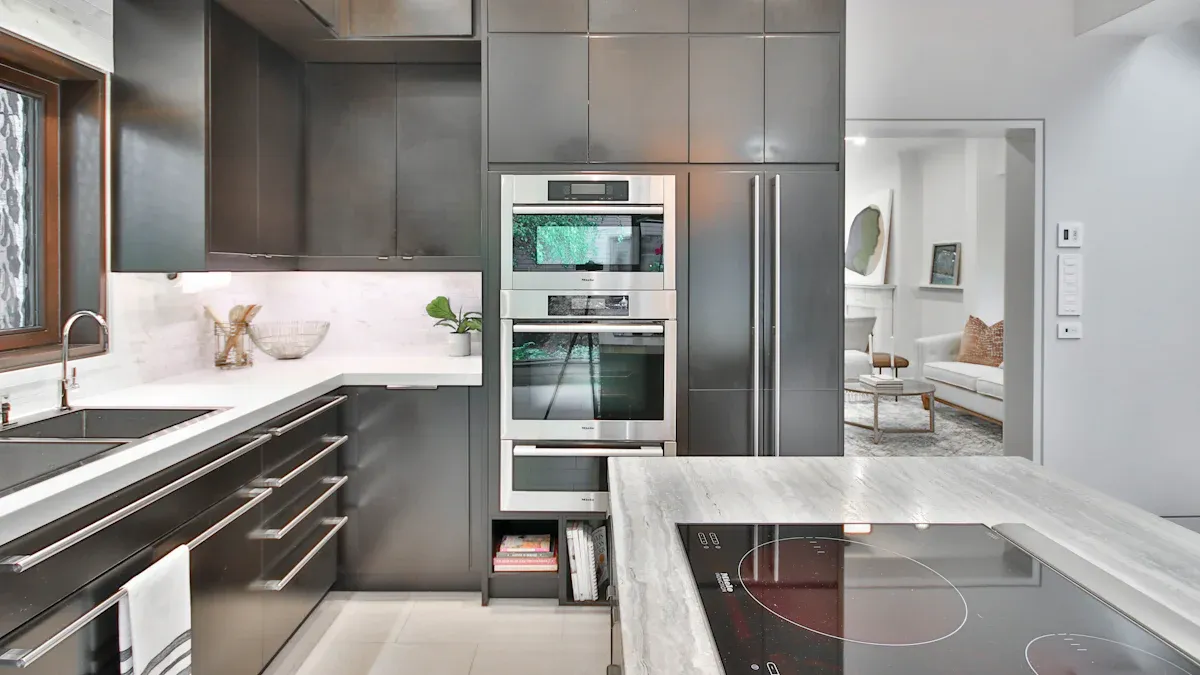
You use stainless steel a lot at home. In the kitchen, you see it in sinks and counters. Pots, pans, and forks are made from it too. Many fridges and ovens use stainless steel. It looks nice and lasts a long time. You can clean these things fast. They do not stain or keep germs. This helps keep your food safe and your kitchen bright.
Common things at home made from stainless steel:
Kitchenware like sinks, counters, pots, pans, and forks
Appliances such as fridges and ovens
Stainless steel has a smooth surface. Stains and germs do not stick to it. This helps you keep your home clean. It does not get rusty or dull from heat. Your pots and pans stay shiny for years. You do not have to worry about bad chemicals in your food. Stainless steel is a safe and smart pick for your family.
Tip: Pick stainless steel for kitchen tools. It is safe, strong, and easy to clean.
Industrial Uses
Big companies use stainless steel for many reasons. In hospitals, you see it in tools for surgery and dental work. Doctors use it for fake joints too. Stainless steel does not react with body fluids. This keeps patients safe. Hospitals use it for tables and MRI machines. It is easy to make these things clean.
Car makers use stainless steel in exhaust pipes and car frames. You also see it in ship containers and trucks. It is great for places near the sea. Rust is a big problem there. Stainless steel does not rust, so cars and ships last longer.
Industrial Sector | Common Applications |
Food and Catering | Kitchen tools, forks, pots, fridges, dishwashers |
Medical | Surgery tools, dental tools, implants, hospital tables |
Energy and Heavy Industry | Machines in chemical, gas, oil, and green energy plants |
Automotive and Transport | Car exhausts, car parts, ship containers, trucks, garbage trucks |
Construction | Wall covers, inside uses, building frames |
Stainless steel is used on boats and oil rigs too. It is strong and stands up to bad weather. In buildings, you see it on walls and in frames. Stainless steel is strong and can be recycled. This helps make safe and long-lasting buildings.
Note: Stainless steel is very important for hospitals, cars, and ships.
You can count on stainless steel because it is strong. It does not rust or corrode easily. You can clean it without much trouble. People use it in many places like hospitals and buildings. Stainless steel helps in different ways:
Application | Why It Works Well |
Medical Tools | Stays sharp and clean after cleaning |
Storage Tanks | Does not rust or corrode |
Construction | Is strong and looks modern |
If you pick stainless steel, you do not need much fixing. You help recycle and get good value for a long time. Think about using it for your next job.
FAQ
What makes stainless steel different from other metals?
You get better rust protection with stainless steel because it contains chromium. This metal forms a shield on the surface. Other metals like iron or aluminum do not have this self-healing layer.
Can you recycle stainless steel?
Yes, you can recycle it many times. The metal keeps its strength and quality. Recycling helps save resources and protects the environment.
Is stainless steel safe for cooking and food storage?
You can use it for cooking and storing food. It does not react with food or change its taste. Many kitchen tools and appliances use this metal for safety and cleanliness.
How do you clean stainless steel surfaces?
Use warm water and mild soap. Wipe with a soft cloth. For tough stains, use baking soda. Avoid steel wool because it can scratch the surface.
Where do you see stainless steel in daily life?
You see it in kitchen sinks, cutlery, medical tools, car parts, and building frames. Its strength and easy cleaning make it popular in many places.